From magnificent domes to cypress hills
Your journey through Florence is a timeline of artistic explosion, political intrigue, and architectural genius that changed the world.
Table of Contents
Florentia: The Roman Origins
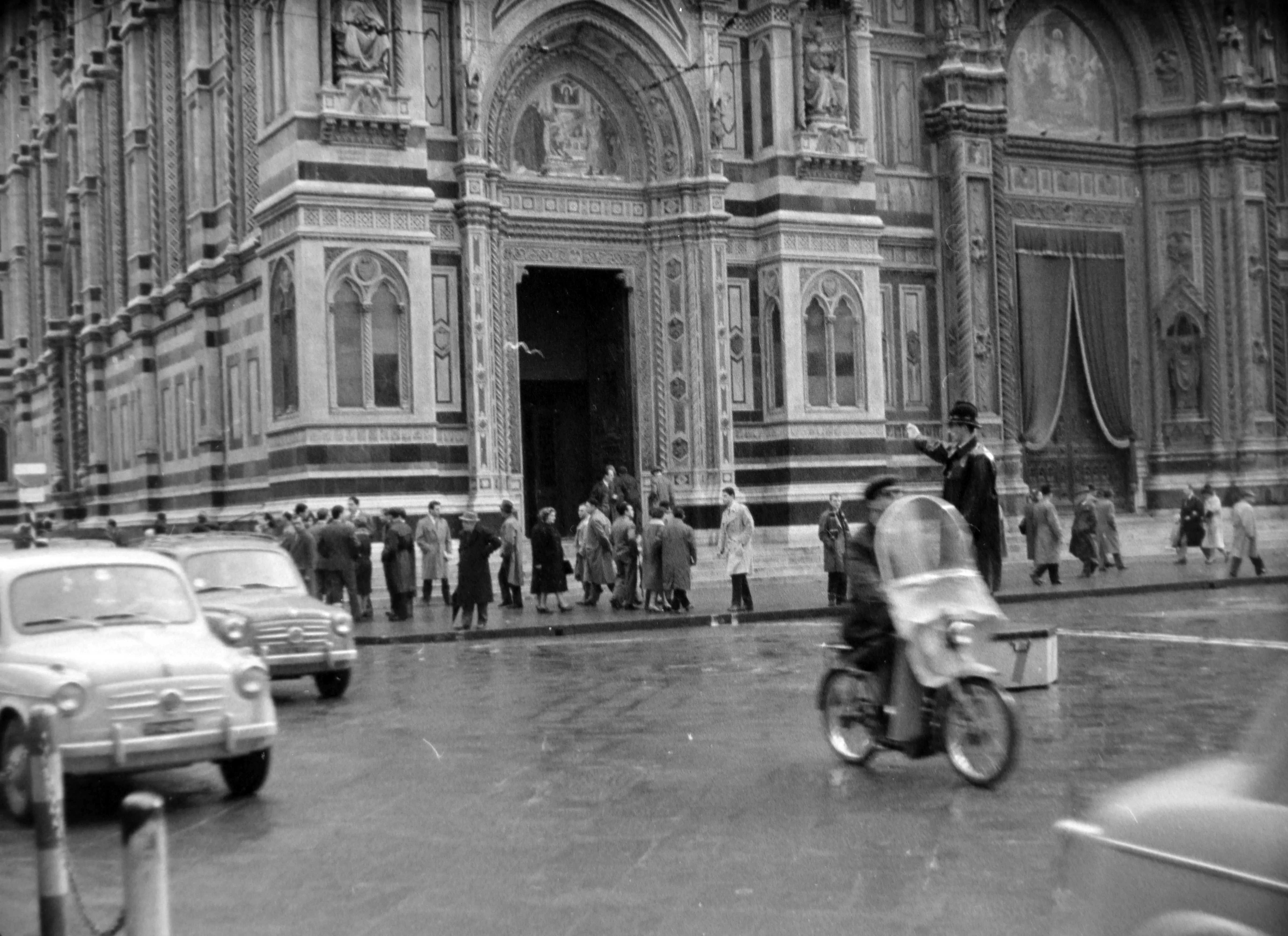
As your bus navigates the ring roads, you are circling the ghost of a Roman wall. Florence began as 'Florentia' in 59 BC, a settlement for retired soldiers established by Julius Caesar. The core of the city, around Piazza della Repubblica, still follows the classic Roman grid pattern of cardo and decumanus. While few Roman ruins remain visible above ground, the very layout of the streets you walk on once you hop off is a direct legacy of imperial planning.
From the upper deck, you might glimpse the outlines of the old city gates (Portacroce, Porta al Prato). These colossal stone structures once marked the boundary between the civilized city and the wild countryside. Today, they stand like islands in modern traffic, silent witnesses to a time when Florence was just a small, fortified outpost guarding the Arno river crossing.
The Rise of the Merchant Republic
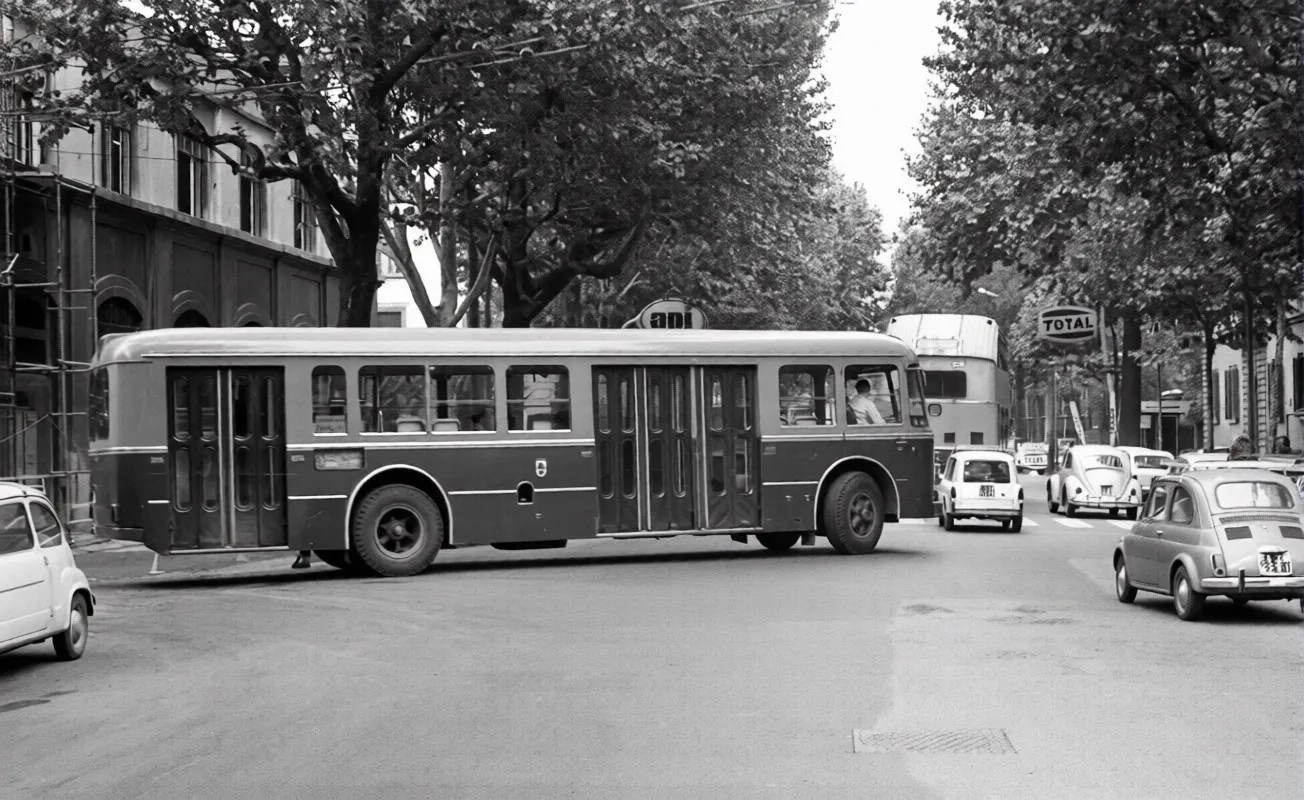
In the Middle Ages, Florence exploded into a powerhouse of trade and finance. As you ride near Santa Croce, you are in the district of the dyers and weavers who turned wool into gold. The immense wealth generated by Florentine bankers—who invented modern banking instruments like the letter of credit—funded the skyscrapers of their day: the tower houses. You can still see truncated versions of these towers bristling in the skyline.
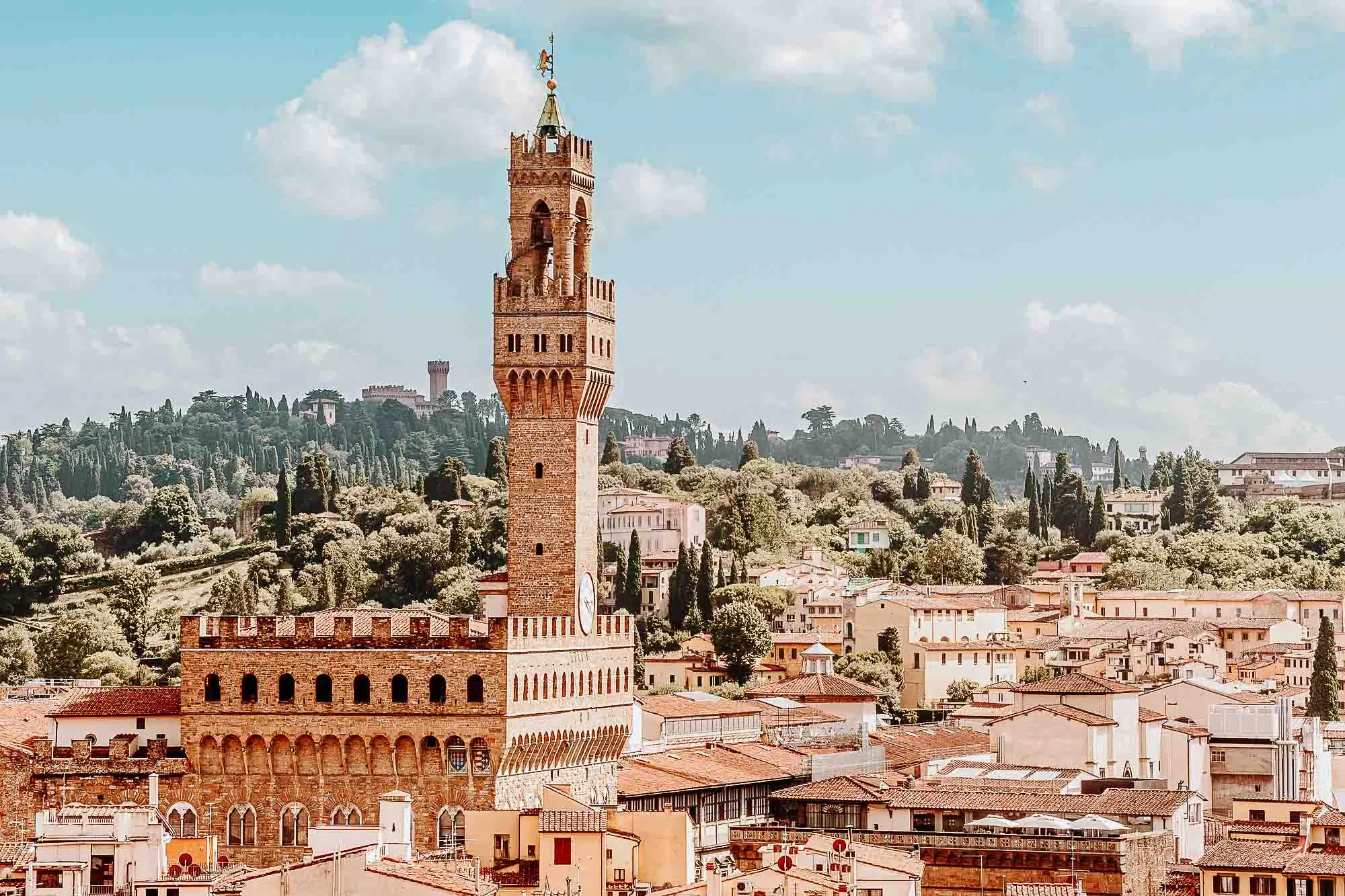
This era was marked by fierce internal conflict between the Guelphs and Ghibellines, a bloody feud that split the city. The imposing stone facades of palaces like Palazzo Vecchio were built not just for luxury, but for defense against street riots. The bus takes you around the perimeter of this intense, claustrophobic stone world, allowing you to see how the city expanded outward, bursting its medieval seams.
The Medici Dynasty & The Renaissance
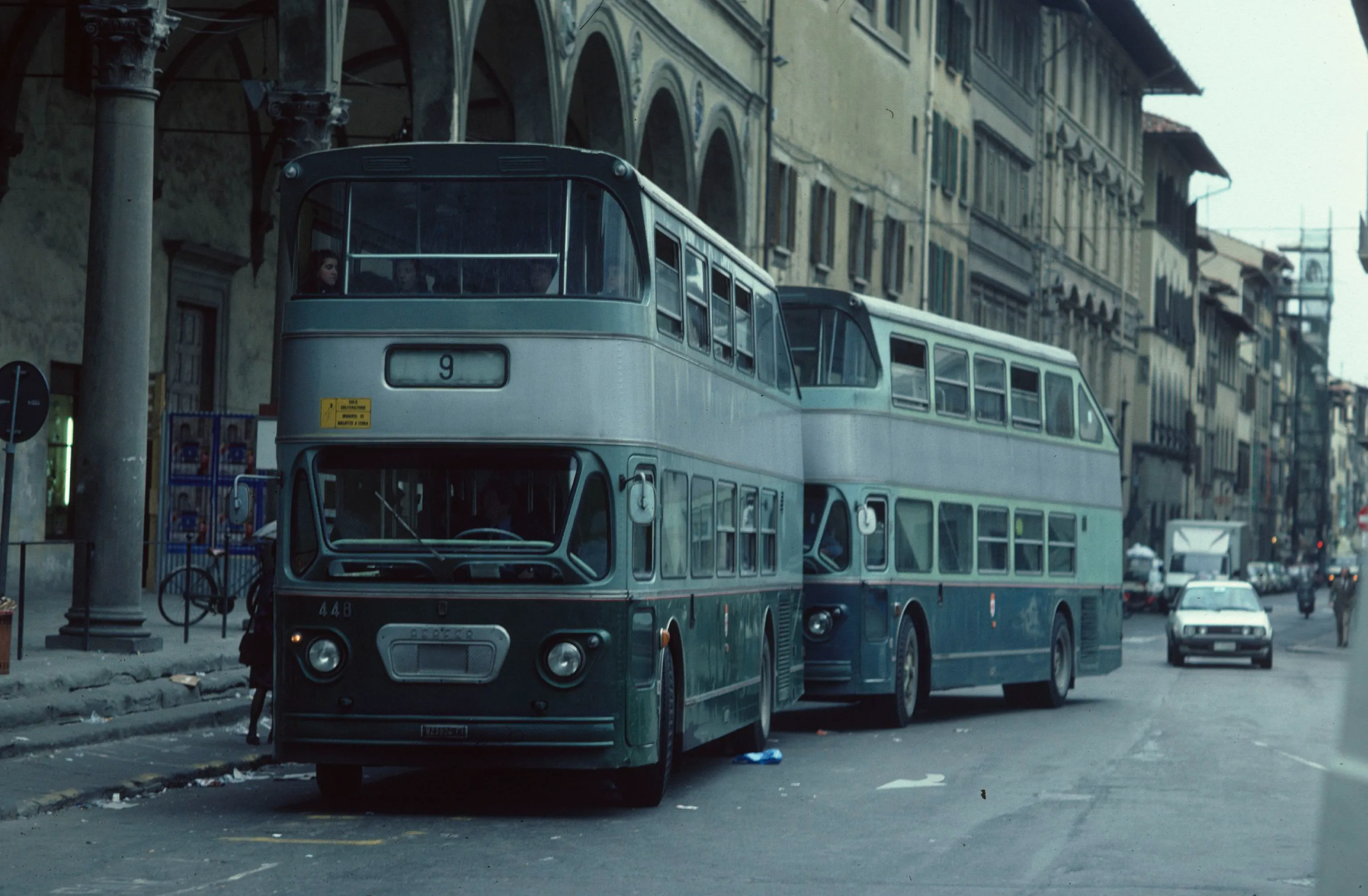
No name defines Florence like 'Medici.' As the bus passes near San Lorenzo and the Medici Chapels, you are close to the power center of this banking family that became de facto rulers. They used their immense fortune to patronize Michelangelo, Botticelli, Galileo, and Leonardo da Vinci, sparking the Renaissance. The very aesthetic of the city—its harmony, proportion, and beauty—is largely their project.
The route towards Pitti Palace (their grand ducal residence) crosses the river, following the path of the 'Vasari Corridor,' a private aerial walkway built so the Grand Duke could move safely from office to home without mixing with the commoners. Riding the bus gives you a sense of the scale of their ambition; they turned a merchant city into a grand stage for courtly power and artistic innovation that drew the envy of all Europe.
Crossing the Arno: Oltrarno & Artisans
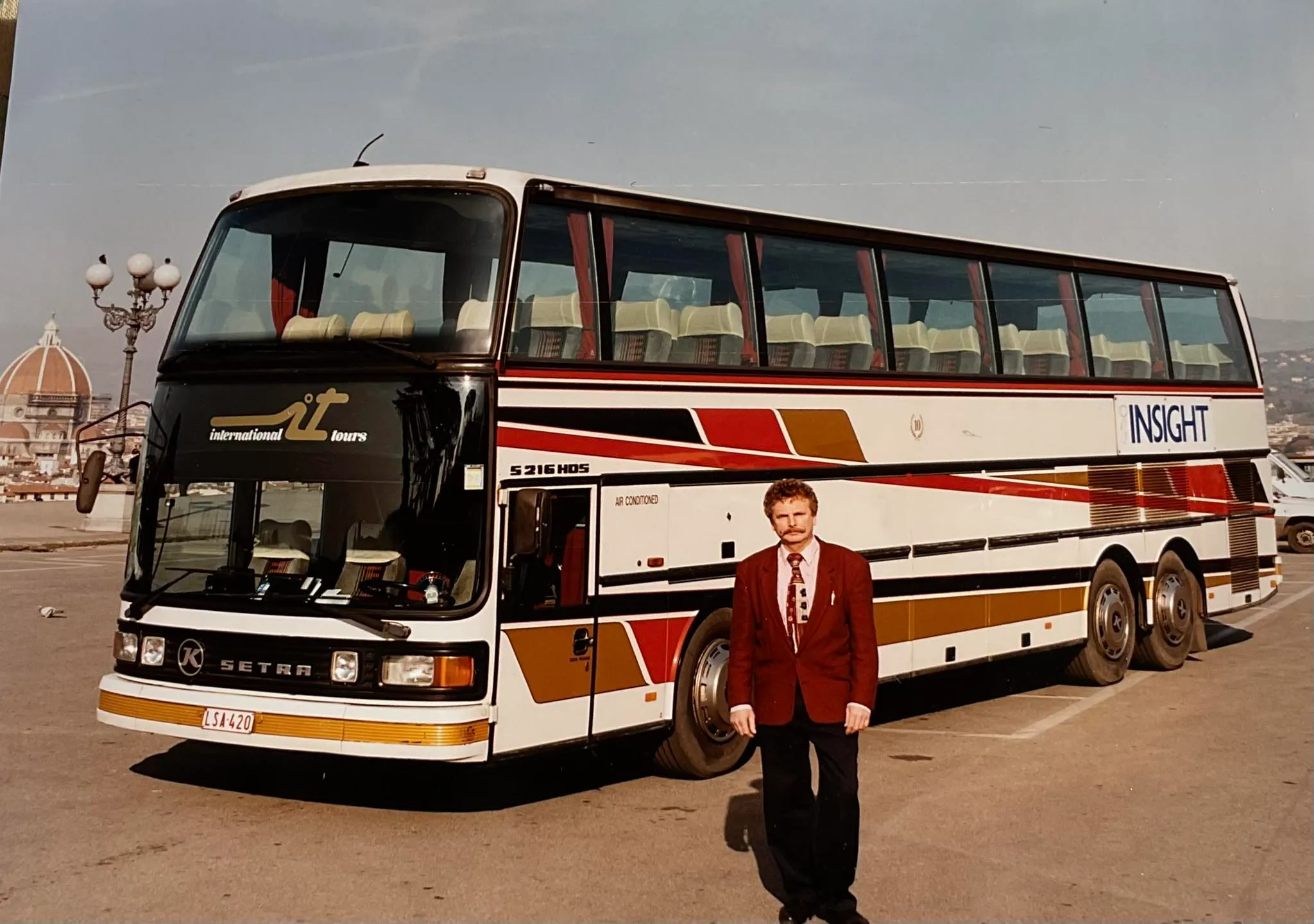
When the bus crosses one of the bridges into the 'Oltrarno' (the 'other side of the Arno'), the atmosphere shifts. Traditionally the working-class district, this area is the soul of Florentine craftsmanship. Here, in narrow workshops, artisans still practice centuries-old techniques of woodcarving, gilding, bookbinding, and leatherworking. It feels more intimate, less monumental, but deeply authentic.
From the bus, you see the quieter squares like Piazza Santo Spirito, where locals gather for morning markets and evening aperitivos. The Oltrarno resists the 'museumification' of the center; it is a living neighborhood. Hopping off here allows you to wander into a workshop and perhaps smell the varnish and sawdust of a restoration in progress, connecting you to the handmade heritage of the city.
The 19th Century: Florence as Capital
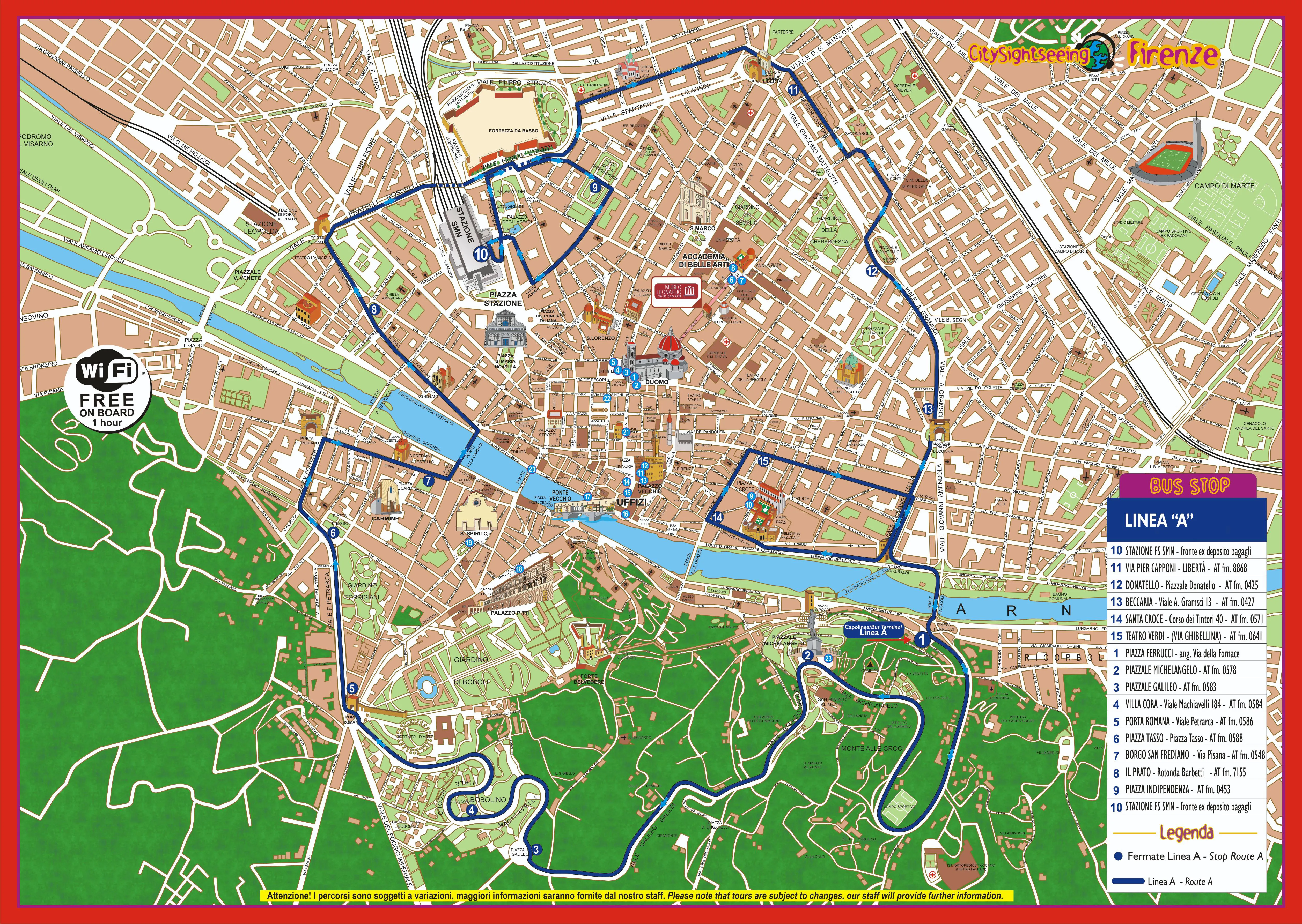
Much of the route your bus travels—the wide, tree-lined boulevards known as the 'Viali'—is a result of a massive urban transformation in the 1860s when Florence was briefly the capital of Italy (before Rome). Architect Giuseppe Poggi tore down the medieval walls to create these Parisian-style avenues, opening the city to light and air.
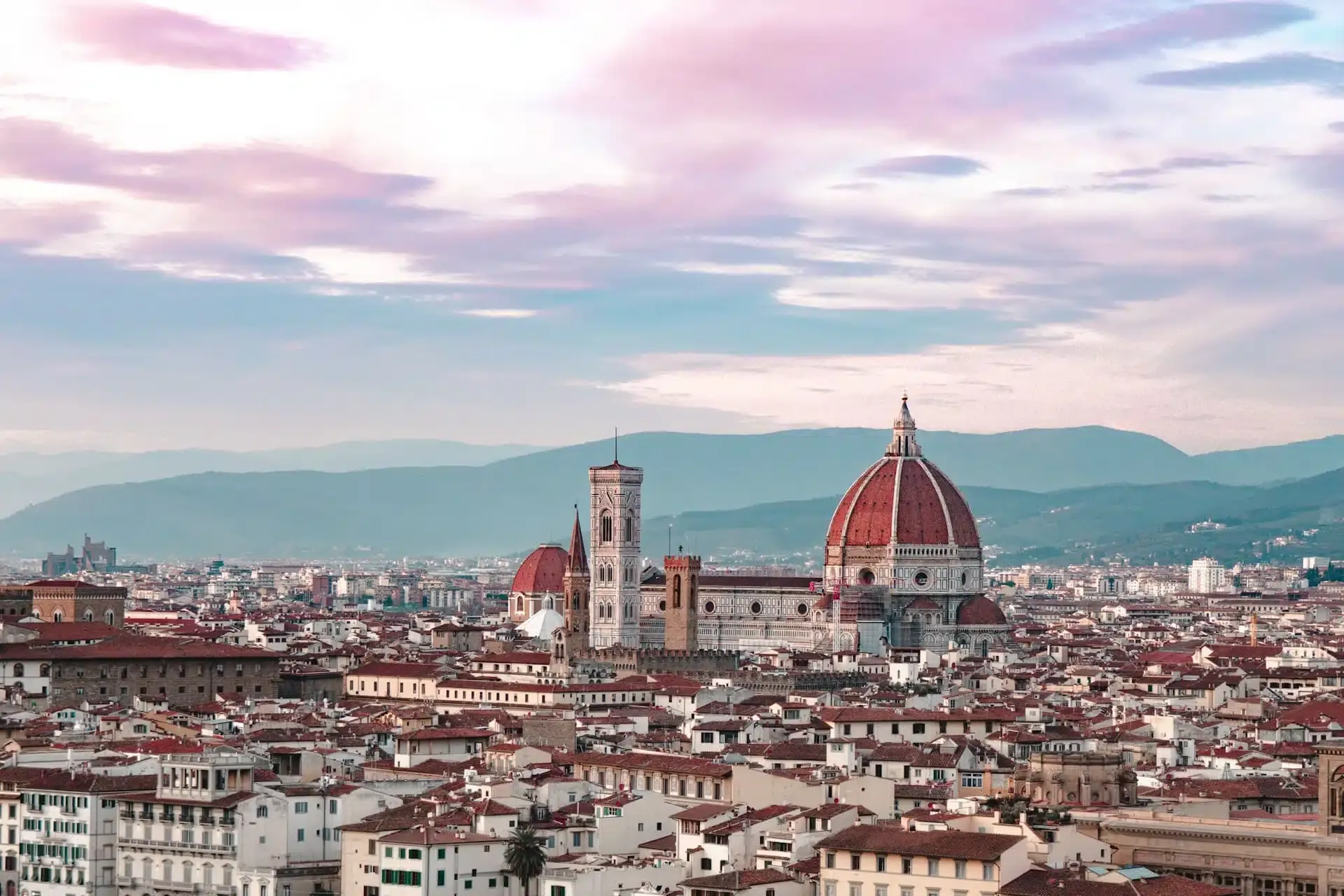
Poggi's masterpiece was the Viale dei Colli, the panoramic road that winds up the hill to Piazzale Michelangelo. As your bus climbs this scenic route, you are experiencing a 19th-century Romantic vision of the city: a carefully choreographed sequence of views designed to wow visitors. The Piazzale itself is a grand terrace dedicated to Michelangelo, offering the skyline view that has defined Florence in the modern imagination.
The Hills of Fiesole: Ancient Etruscans
If you take Line B, you travel even further back in time. Fiesole, perched high on the hill, is actually older than Florence. It was an Etruscan stronghold long before the Romans set up their camp in the valley below. As the bus winds up the steep roads, passing luxury villas and cypress groves, you are following an ancient path.
Fiesole has always been the summer retreat for wealthy Florentines escaping the heat and malaria of the valley. The Medici built villas here, and British expatriates in the 19th century fell in love with its gardens. Hopping off in Fiesole allows you to visit the Roman theatre and look down on Florence from a superior height, understanding why the ancients chose this defensive hilltop first.
War, Flood, and Resilience
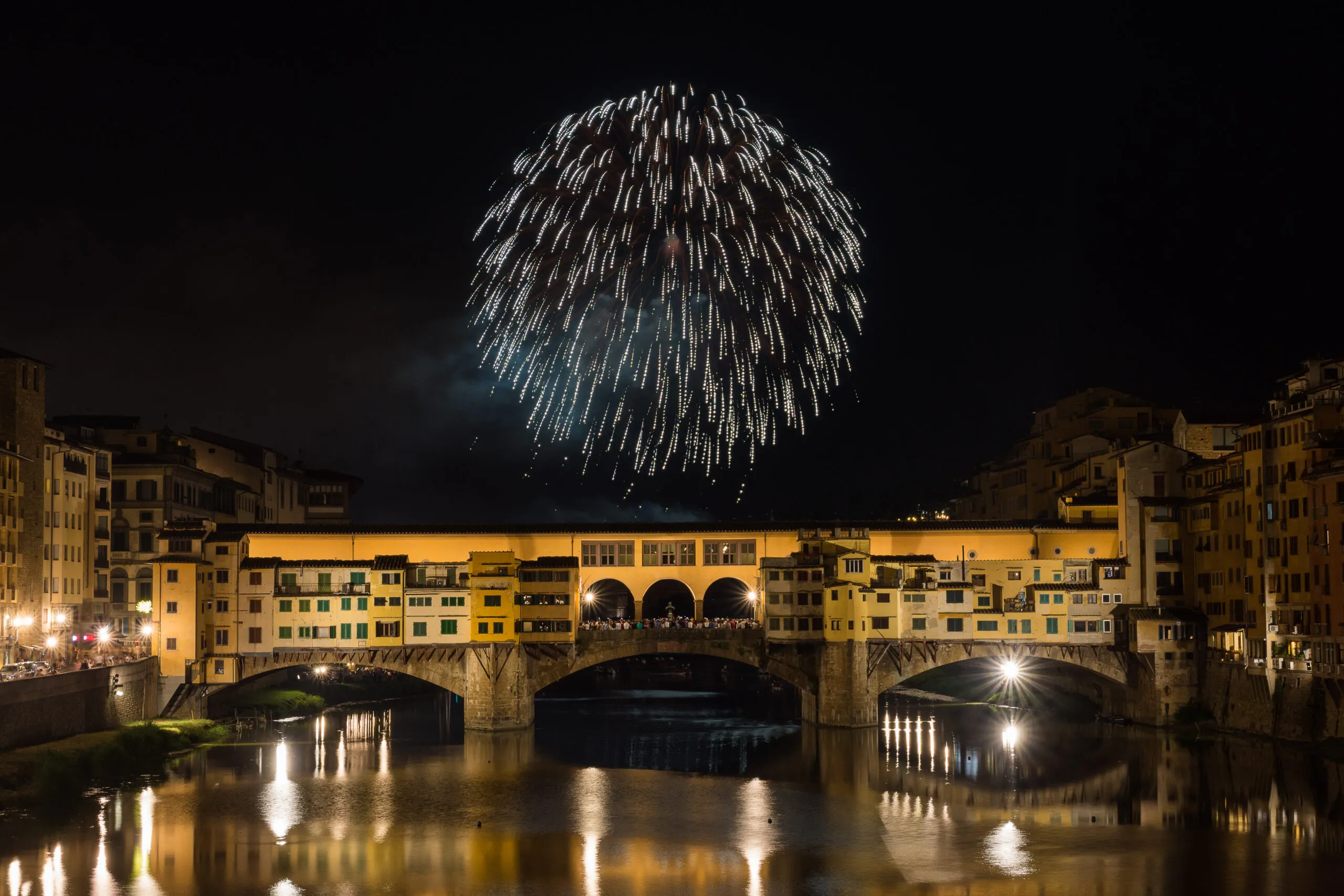
Florence's beauty has been scarred by tragedy. During WWII, retreating German forces blew up all the bridges across the Arno except for the Ponte Vecchio, sparing it allegedly on Hitler's orders. As you cross the modern bridges reconstructed in the 1950s, you can contrast them with the ancient span of the Old Bridge.
More recently, the devastating flood of 1966 saw the Arno burst its banks, burying the historic center in mud and oil, damaging thousands of artworks. The city's recovery was aided by the 'Mud Angels,' young volunteers from around the world. As you ride along the Lungarno (river embankments), notice the small plaques high up on building walls marking the terrifying level the water reached—often well above the height of the bus.
Modern Florence & The Ring Roads
Today's Florence is a city balancing mass tourism with modern life. The ring roads you travel are the arteries of a bustling regional capital. You'll see Vespas weaving through traffic, frantic commuters, and the sleek tramway lines connecting the suburbs. It's a reminder that Florence is not just a Renaissance theme park.
The hop-on hop-off bus plays a crucial role here, keeping tourist traffic out of the fragile medieval pedestrian zones while allowing visitors to circle the perimeter. It represents the modern compromise: accessibility without destruction. From your elevated seat, you watch the dance of the 21st century around the immovable stone giants of the 15th.
Art, Science, and Humanism
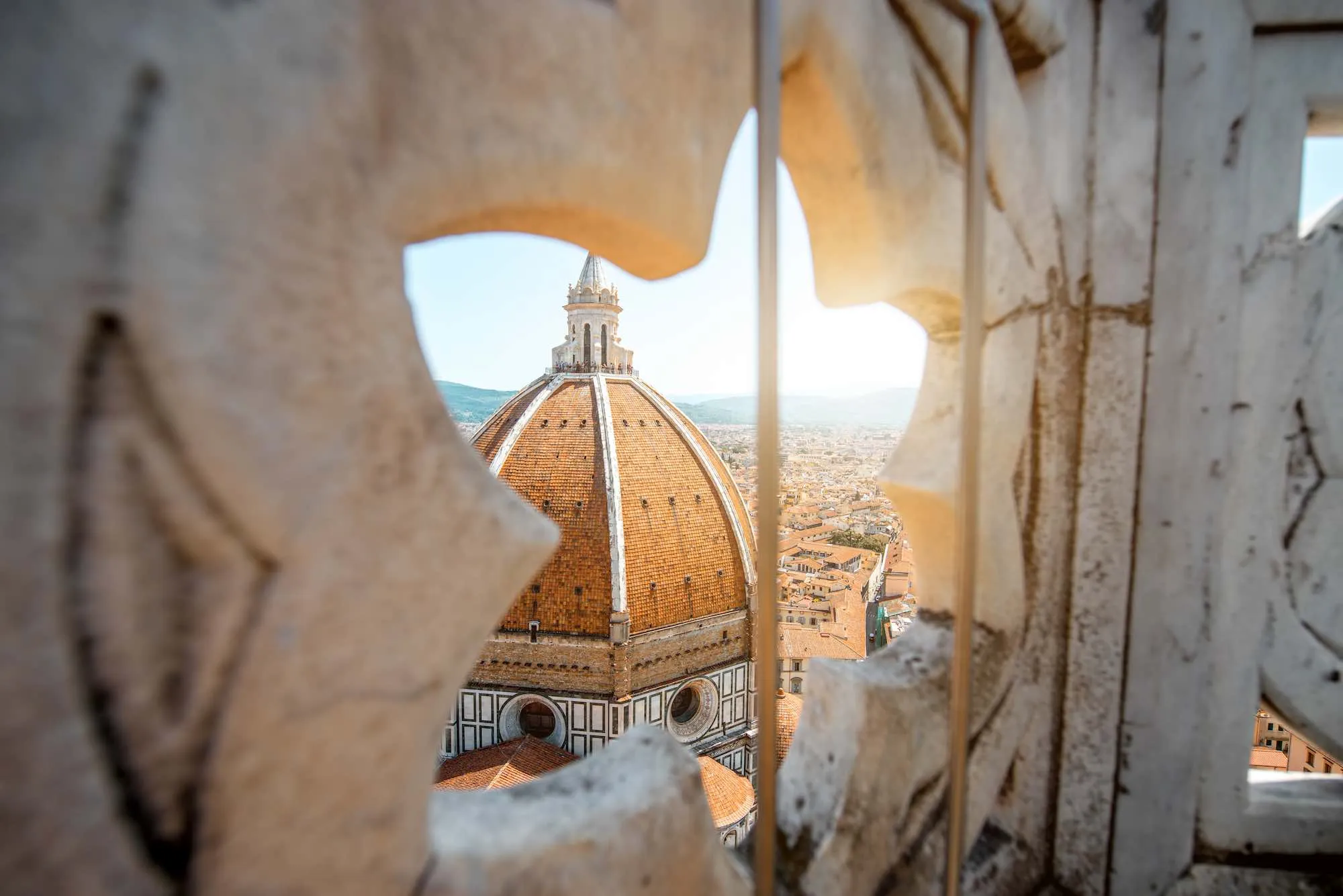
Florence didn't just produce pretty paintings; it revolutionized how we see the world. Perspective was formalized here; political science was born with Machiavelli; Galileo turned his telescope to the heavens from these hills. As you pass the Museo Galileo or the National Library, you are passing the repositories of this intellectual revolution.
The bus audio guide often highlights these connections, reminding you that the statues you see are of men who risked imprisonment or death for their ideas. The 'Humanism' born here placed humanity at the center of the universe, a shift in thinking that is written in the very architecture of the open squares and public loggias.
Architecture: The City of Stone
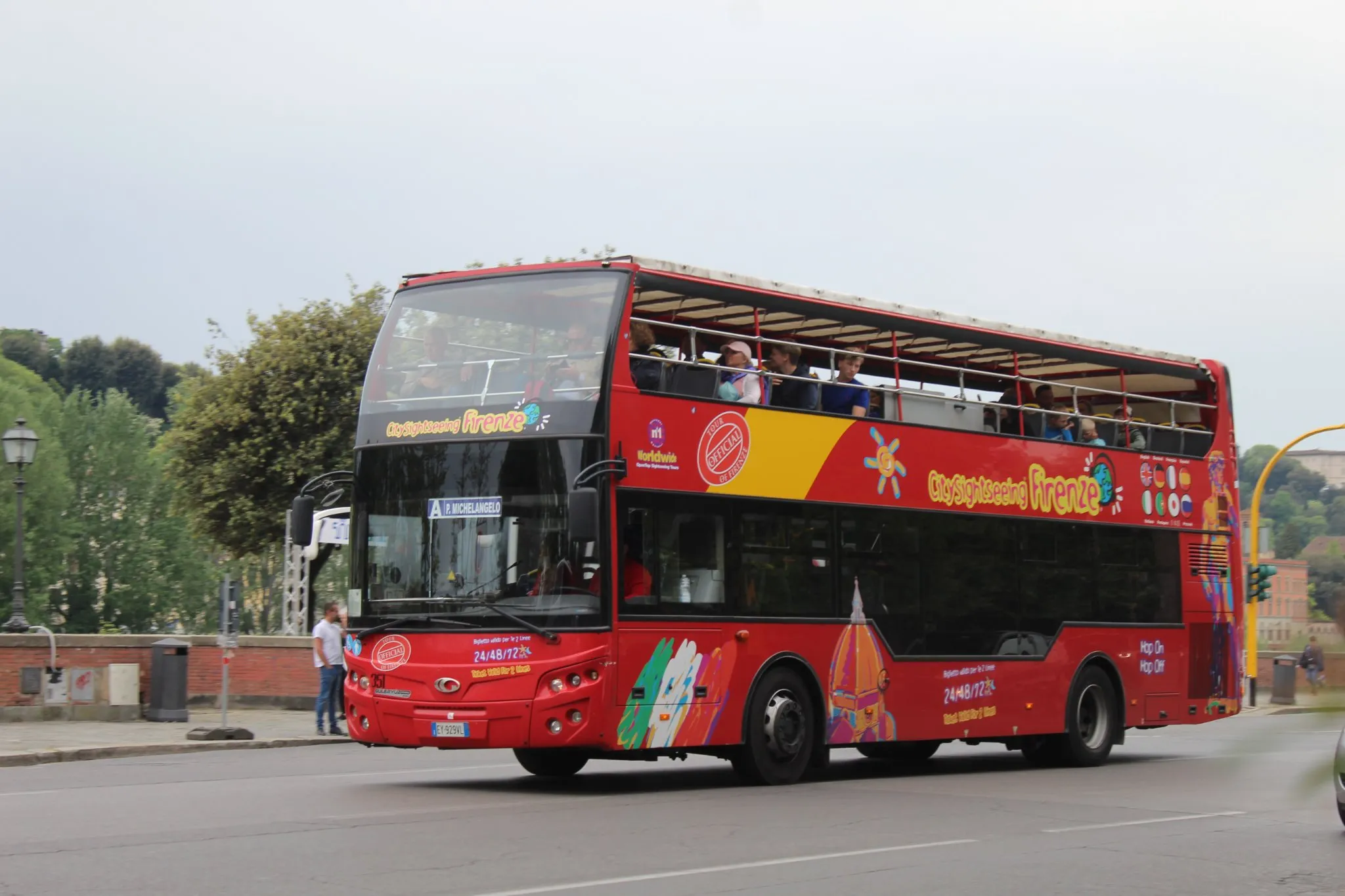
Characteristically, Florence is a city of stone—'pietra forte' and 'pietra serena.' Unlike the brick of Siena or the marble of Rome, Florence often presents a tough, severe face to the street. The rusticated stone heavy facades of the Renaissance palaces were meant to impress and intimidate. From the bus, you really appreciate this architectural muscle.
Yet, inside these fortresses differ: elegant courtyards with delicate columns and gardens. The bus gives you the exterior 'public' view, the face of power. It's an invitation to hop off and discover the private beauty hidden behind those massive doors.
The River Arno: Lifeblood and Threat
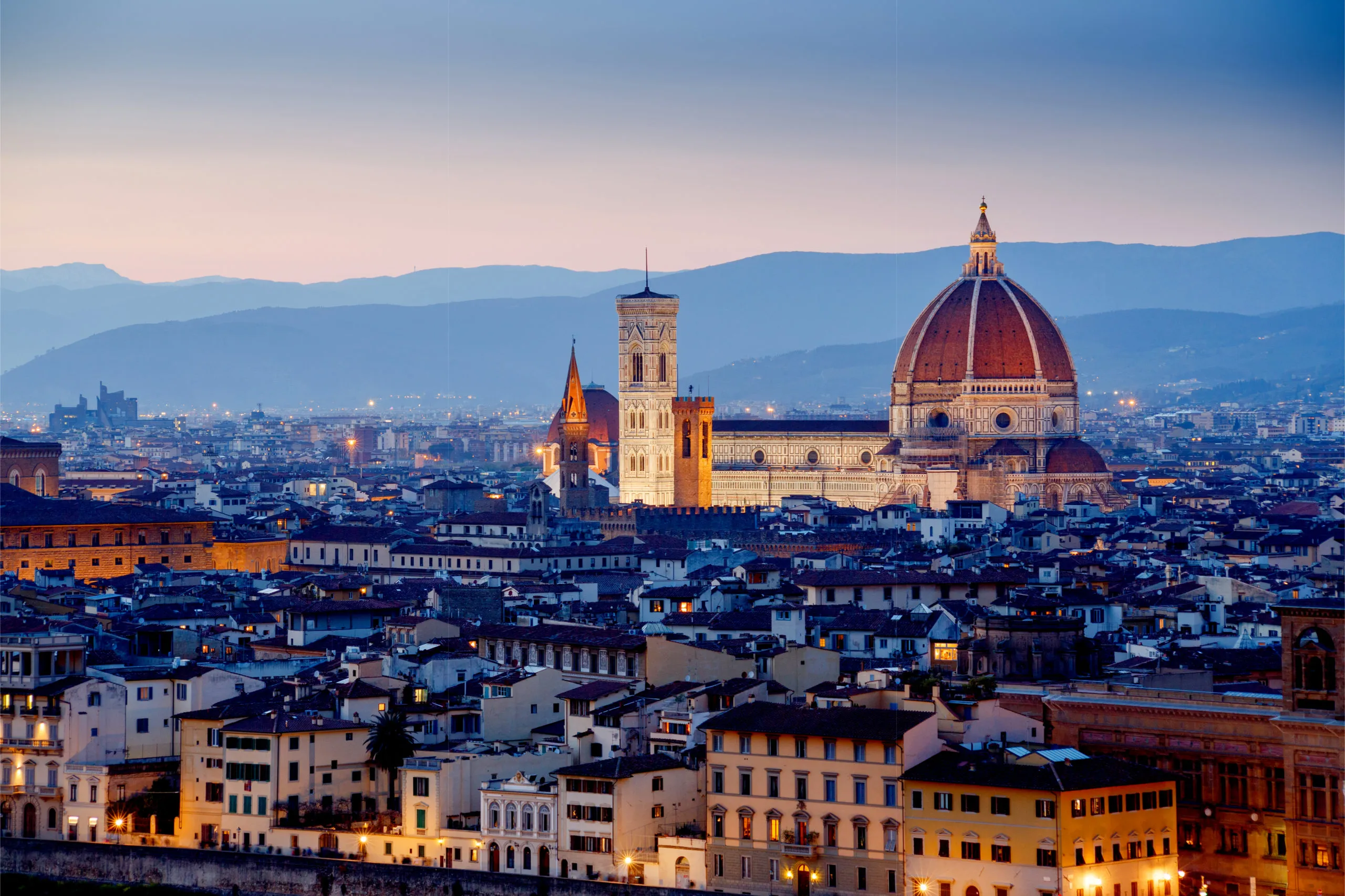
The Arno is the protagonist of the view from the bus for much of the journey. It's a torrential, moody river, turning from a trickle in summer to a raging brown torrent in autumn. It provided the water for the wool industry and the sand for building, but it has always been a dangerous neighbor.
Riding along the embankments offers the best open views in the city center. You can see the rowing clubs practicing, the weir (pescaia) managing the flow, and the famous golden light reflecting off the water at sunset—a light that has captivated painters for centuries.
Legends of the Streets
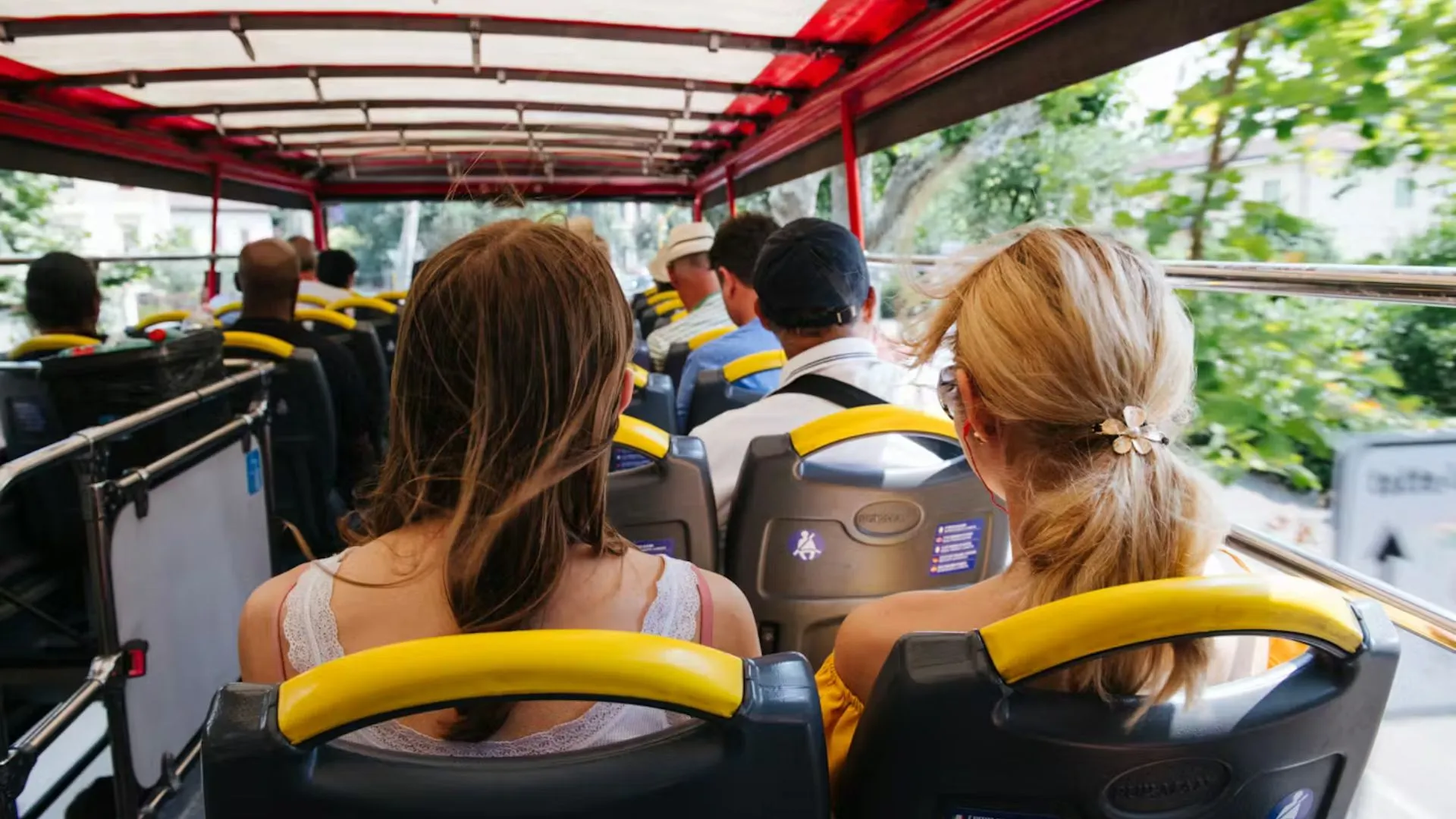
Every corner in Florence has a ghost story or a legend. The 'Berta' (a stone head protruding from a church wall), the Devil's rock on Palazzo Vecchio, the window that is always left open... The bus passes many of these swiftly, but the audio commentary often points out these quirky details that you might miss on foot.
These legends add a layer of folklore to the high art. They tell the story of the common people—their superstitions, their jokes, and their fears—living in the shadow of the great masters.
Your Window to History
Ultimately, the bus is your moving balcony. In a city where seeing everything on foot can result in 'Stendhal Syndrome' (dizziness from too much beauty), the bus offers a paced, curated visual experience. It frames the city for you.
Whether you are looking up at the darkly looming Palazzo Pitti or down from the glorious heights of San Miniato al Monte, the journey connects the dots of history. It turns a list of monuments into a cohesive narrative of a city that changed the world, and invites you to become a temporary part of its ongoing story.
Table of Contents
Florentia: The Roman Origins
As your bus navigates the ring roads, you are circling the ghost of a Roman wall. Florence began as 'Florentia' in 59 BC, a settlement for retired soldiers established by Julius Caesar. The core of the city, around Piazza della Repubblica, still follows the classic Roman grid pattern of cardo and decumanus. While few Roman ruins remain visible above ground, the very layout of the streets you walk on once you hop off is a direct legacy of imperial planning.
From the upper deck, you might glimpse the outlines of the old city gates (Portacroce, Porta al Prato). These colossal stone structures once marked the boundary between the civilized city and the wild countryside. Today, they stand like islands in modern traffic, silent witnesses to a time when Florence was just a small, fortified outpost guarding the Arno river crossing.
The Rise of the Merchant Republic
In the Middle Ages, Florence exploded into a powerhouse of trade and finance. As you ride near Santa Croce, you are in the district of the dyers and weavers who turned wool into gold. The immense wealth generated by Florentine bankers—who invented modern banking instruments like the letter of credit—funded the skyscrapers of their day: the tower houses. You can still see truncated versions of these towers bristling in the skyline.
This era was marked by fierce internal conflict between the Guelphs and Ghibellines, a bloody feud that split the city. The imposing stone facades of palaces like Palazzo Vecchio were built not just for luxury, but for defense against street riots. The bus takes you around the perimeter of this intense, claustrophobic stone world, allowing you to see how the city expanded outward, bursting its medieval seams.
The Medici Dynasty & The Renaissance
No name defines Florence like 'Medici.' As the bus passes near San Lorenzo and the Medici Chapels, you are close to the power center of this banking family that became de facto rulers. They used their immense fortune to patronize Michelangelo, Botticelli, Galileo, and Leonardo da Vinci, sparking the Renaissance. The very aesthetic of the city—its harmony, proportion, and beauty—is largely their project.
The route towards Pitti Palace (their grand ducal residence) crosses the river, following the path of the 'Vasari Corridor,' a private aerial walkway built so the Grand Duke could move safely from office to home without mixing with the commoners. Riding the bus gives you a sense of the scale of their ambition; they turned a merchant city into a grand stage for courtly power and artistic innovation that drew the envy of all Europe.
Crossing the Arno: Oltrarno & Artisans
When the bus crosses one of the bridges into the 'Oltrarno' (the 'other side of the Arno'), the atmosphere shifts. Traditionally the working-class district, this area is the soul of Florentine craftsmanship. Here, in narrow workshops, artisans still practice centuries-old techniques of woodcarving, gilding, bookbinding, and leatherworking. It feels more intimate, less monumental, but deeply authentic.
From the bus, you see the quieter squares like Piazza Santo Spirito, where locals gather for morning markets and evening aperitivos. The Oltrarno resists the 'museumification' of the center; it is a living neighborhood. Hopping off here allows you to wander into a workshop and perhaps smell the varnish and sawdust of a restoration in progress, connecting you to the handmade heritage of the city.
The 19th Century: Florence as Capital
Much of the route your bus travels—the wide, tree-lined boulevards known as the 'Viali'—is a result of a massive urban transformation in the 1860s when Florence was briefly the capital of Italy (before Rome). Architect Giuseppe Poggi tore down the medieval walls to create these Parisian-style avenues, opening the city to light and air.
Poggi's masterpiece was the Viale dei Colli, the panoramic road that winds up the hill to Piazzale Michelangelo. As your bus climbs this scenic route, you are experiencing a 19th-century Romantic vision of the city: a carefully choreographed sequence of views designed to wow visitors. The Piazzale itself is a grand terrace dedicated to Michelangelo, offering the skyline view that has defined Florence in the modern imagination.
The Hills of Fiesole: Ancient Etruscans
If you take Line B, you travel even further back in time. Fiesole, perched high on the hill, is actually older than Florence. It was an Etruscan stronghold long before the Romans set up their camp in the valley below. As the bus winds up the steep roads, passing luxury villas and cypress groves, you are following an ancient path.
Fiesole has always been the summer retreat for wealthy Florentines escaping the heat and malaria of the valley. The Medici built villas here, and British expatriates in the 19th century fell in love with its gardens. Hopping off in Fiesole allows you to visit the Roman theatre and look down on Florence from a superior height, understanding why the ancients chose this defensive hilltop first.
War, Flood, and Resilience
Florence's beauty has been scarred by tragedy. During WWII, retreating German forces blew up all the bridges across the Arno except for the Ponte Vecchio, sparing it allegedly on Hitler's orders. As you cross the modern bridges reconstructed in the 1950s, you can contrast them with the ancient span of the Old Bridge.
More recently, the devastating flood of 1966 saw the Arno burst its banks, burying the historic center in mud and oil, damaging thousands of artworks. The city's recovery was aided by the 'Mud Angels,' young volunteers from around the world. As you ride along the Lungarno (river embankments), notice the small plaques high up on building walls marking the terrifying level the water reached—often well above the height of the bus.
Modern Florence & The Ring Roads
Today's Florence is a city balancing mass tourism with modern life. The ring roads you travel are the arteries of a bustling regional capital. You'll see Vespas weaving through traffic, frantic commuters, and the sleek tramway lines connecting the suburbs. It's a reminder that Florence is not just a Renaissance theme park.
The hop-on hop-off bus plays a crucial role here, keeping tourist traffic out of the fragile medieval pedestrian zones while allowing visitors to circle the perimeter. It represents the modern compromise: accessibility without destruction. From your elevated seat, you watch the dance of the 21st century around the immovable stone giants of the 15th.
Art, Science, and Humanism
Florence didn't just produce pretty paintings; it revolutionized how we see the world. Perspective was formalized here; political science was born with Machiavelli; Galileo turned his telescope to the heavens from these hills. As you pass the Museo Galileo or the National Library, you are passing the repositories of this intellectual revolution.
The bus audio guide often highlights these connections, reminding you that the statues you see are of men who risked imprisonment or death for their ideas. The 'Humanism' born here placed humanity at the center of the universe, a shift in thinking that is written in the very architecture of the open squares and public loggias.
Architecture: The City of Stone
Characteristically, Florence is a city of stone—'pietra forte' and 'pietra serena.' Unlike the brick of Siena or the marble of Rome, Florence often presents a tough, severe face to the street. The rusticated stone heavy facades of the Renaissance palaces were meant to impress and intimidate. From the bus, you really appreciate this architectural muscle.
Yet, inside these fortresses differ: elegant courtyards with delicate columns and gardens. The bus gives you the exterior 'public' view, the face of power. It's an invitation to hop off and discover the private beauty hidden behind those massive doors.
The River Arno: Lifeblood and Threat
The Arno is the protagonist of the view from the bus for much of the journey. It's a torrential, moody river, turning from a trickle in summer to a raging brown torrent in autumn. It provided the water for the wool industry and the sand for building, but it has always been a dangerous neighbor.
Riding along the embankments offers the best open views in the city center. You can see the rowing clubs practicing, the weir (pescaia) managing the flow, and the famous golden light reflecting off the water at sunset—a light that has captivated painters for centuries.
Legends of the Streets
Every corner in Florence has a ghost story or a legend. The 'Berta' (a stone head protruding from a church wall), the Devil's rock on Palazzo Vecchio, the window that is always left open... The bus passes many of these swiftly, but the audio commentary often points out these quirky details that you might miss on foot.
These legends add a layer of folklore to the high art. They tell the story of the common people—their superstitions, their jokes, and their fears—living in the shadow of the great masters.
Your Window to History
Ultimately, the bus is your moving balcony. In a city where seeing everything on foot can result in 'Stendhal Syndrome' (dizziness from too much beauty), the bus offers a paced, curated visual experience. It frames the city for you.
Whether you are looking up at the darkly looming Palazzo Pitti or down from the glorious heights of San Miniato al Monte, the journey connects the dots of history. It turns a list of monuments into a cohesive narrative of a city that changed the world, and invites you to become a temporary part of its ongoing story.